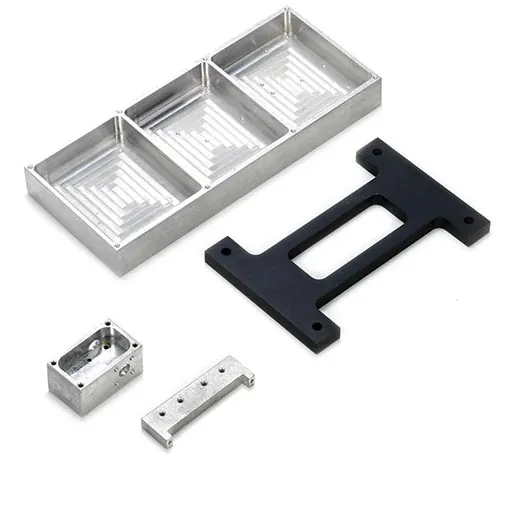
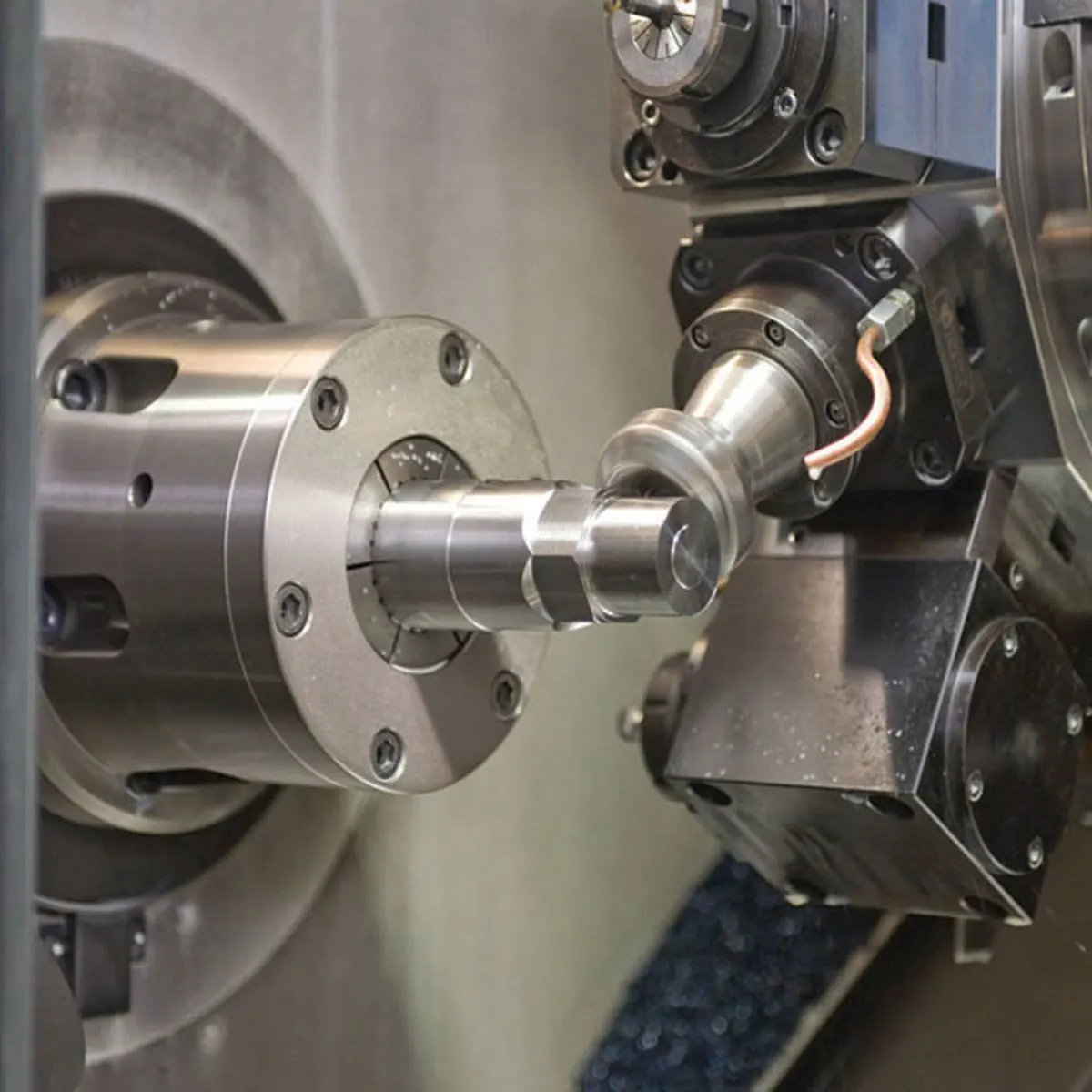
Machining
Screen and pad printing
At our Polaveno plant we have an advanced graphics department with state-of-the-art machines for any screen printing or pad printing job.
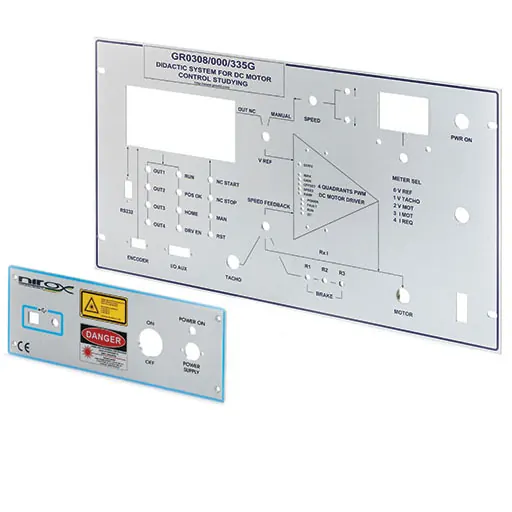
Screen printing
Screen printing is a technique for printing images and graphics on any substrate through a printing mesh: the ink is deposited through the open areas of the mesh. The Italian word serigrafia comes from Latin seri (silk) and Greek grapho (to write), because the first meshes used as stencils were made of silk.
Once the stencil is transferred onto the frame, the frame is placed on the substrate; ink placed at the top is spread with a rubber blade (squeegee) and passes through the open areas onto the substrate (aluminium, steel, etc.). The frame is then removed and the part left to dry; after cleaning, the frame can be reused.
Pad printing
Pad printing is an indirect process that reproduces drawings, lettering and decorations simply and with high fidelity and resolution on flat, concave, convex or irregular surfaces: in practice, it transfers 2D graphics onto 3D objects.
A soft pad transfers a film of indelible ink from an etched steel or photopolymer plate (cliché) to the part, adapting to its shape. Pad printing offers finer definition than screen printing, reproduces the thinnest lines sharply even in several colours, and allows excellent four-colour prints. It can also deposit functional materials such as conductive inks, adhesives and lubricants.
In the catalogue · Pages 206–210
Product catalogue 2027
Let’s talk about your project
From design to the finished system
Catalogue products or built to your specification: tell us what you need.